
Lemosho Route Kilimanjaro Trek – 9 Days (7 Days Climbing)
Overview
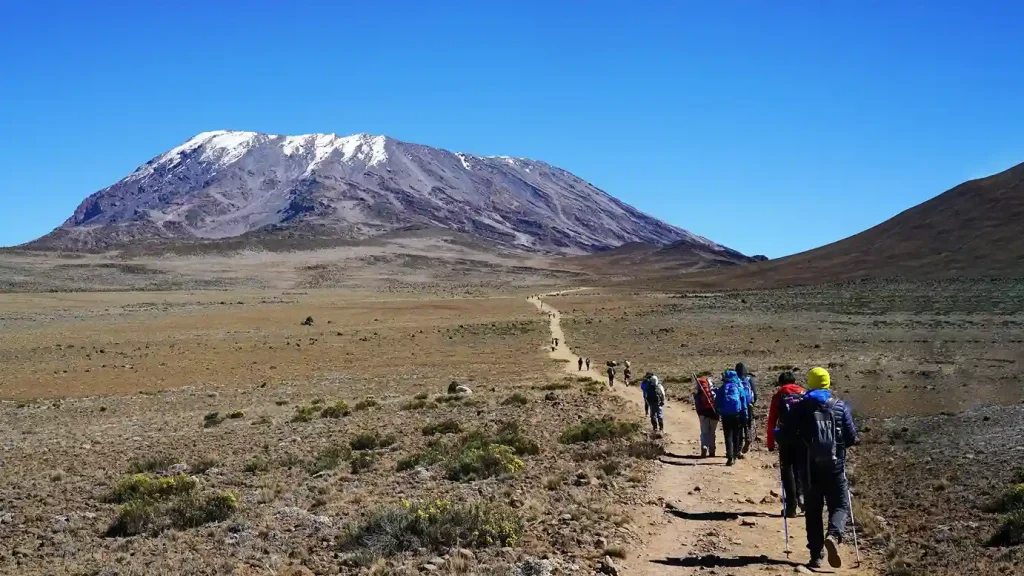
First, the Lemosho Route Kilimanjaro Trek is one of the most scenic and rewarding routes on the mountain. Moreover, it offers excellent acclimatization, varied landscapes, and panoramic views. Additionally, trekkers traverse lush montane forests, alpine moorlands, and the Shira Plateau. In fact, the route features unique volcanic formations before reaching the summit. Consequently, it provides a high success rate for reaching Uhuru Peak. Therefore, it is ideal for those seeking a balanced and beautiful climb. Finally, this 9-day journey ensures you fully experience the natural beauty of Mount Kilimanjaro.
Itinerary Day By Day
Day 1: Arrival in Moshi/Arusha
Arrive at Moshi or Arusha, where your driver will transfer you to your hotel. Take the day to rest, acclimatize, and prepare for the climb. Your guides will meet you to discuss the route, check your gear, and provide an orientation for the adventure ahead.
Day 2: Lemosho Gate to Big Tree Camp
Drive to Lemosho Gate and complete park formalities. Begin the trek through lush montane forest toward Big Tree Camp. The trail winds gently uphill, offering views of tropical flora and occasional wildlife. Overnight at Big Tree Camp.
Hiking: 4–5 hours
Overnight Altitude: ~2,640 m / 8,660 ft
Day 3: Big Tree Camp to Shira 1 Camp
Trek through the forested slopes to Shira 1 Camp, crossing into the moorland zone. Enjoy stunning panoramic views of Kilimanjaro and the Shira Plateau. Overnight at Shira 1 Camp.
Hiking: 5–6 hours
Overnight Altitude: ~3,500 m / 11,480 ft
Day 4: Shira 1 Camp to Shira 2 Camp
Continue across the plateau, passing unique alpine vegetation and volcanic landscapes. The trail gradually ascends toward Shira 2 Camp, offering spectacular photo opportunities. Overnight at Shira 2 Camp.
Hiking: 3–4 hours
Overnight Altitude: ~3,850 m / 12,630 ft
Day 5: Shira 2 Camp to Barranco Camp
Descend slightly toward the Barranco Valley, passing impressive rock formations and scenic ridges. This is a longer day, giving the body extra time to acclimatize. Overnight at Barranco Camp.
Hiking: 6–7 hours
Overnight Altitude: ~3,950 m / 12,960 ft
Day 6: Barranco Camp to Barafu Camp
Trek up the steep Barranco Wall and continue over several ridges and valleys before arriving at Barafu Camp, the base for the summit attempt. Prepare for an early night as summit day begins around midnight.
Hiking: 4–5 hours
Overnight Altitude: ~4,600 m / 15,090 ft
Day 7: Barafu Camp to Uhuru Peak to Mweka Camp
Summit day begins at midnight. Hike slowly in the cold, following headlamps up to Stella Point and then to Uhuru Peak, the roof of Africa (5,895 m / 19,341 ft). After celebration and photos, descend to Mweka Camp for rest.
Hiking: 6–7 hours ascent, 6–8 hours descent
Summit: ~5,895 m / 19,341 ft
Overnight Altitude: ~3,100 m / 10,170 ft
Day 8: Mweka Camp to Mweka Gate and Return to Moshi/Arusha
Descend through rainforest to Mweka Gate. Receive your summit certificates and transfer back to Moshi/Arusha for a hot shower and celebratory dinner. Overnight in hotel.
Hiking: 3–5 hours
Overnight Altitude: ~1,640 m / 5,380 ft
Day 9: Departure from Moshi / Arusha
After breakfast, transfer to Kilimanjaro International Airport for your onward flight home, marking the end of your Kilimanjaro adventure.
Safari Includes
Experienced licensed guides and porters
Park fees and camping permits
Accommodation in tents during the climb and hotels for arrival and post-climb nights
Meals while on the mountain
Transportation to and from trailhead
Safari Excludes
International and domestic flights
Tips for guides and porters
Personal gear and equipment (sleeping bags, trekking poles, etc.)
Drinks, snacks, and souvenirs
Faqs
1. How difficult is it to climb Mount Kilimanjaro?
Mount Kilimanjaro is challenging but achievable for most people. The climb does not require technical climbing skills. The biggest challenge is the altitude, not the terrain. With proper acclimatization and a steady pace, many climbers reach the summit successfully.
2. What can I expect from a safari in Tanzania with Yote Tanzania Adventures?
With Yote Tanzania Adventures, you can expect a well-organized, authentic, and personalized safari experience. Our safaris include professional local guides, comfortable safari vehicles, carefully selected lodges, and thoughtfully planned itineraries designed to maximize wildlife viewing while ensuring comfort and safety.
3. Do I need prior trekking or climbing experience?
No prior climbing experience is required to climb Mount Kilimanjaro. It is a high-altitude hike rather than a technical mountain. Basic fitness, determination, and following your guide’s advice are the most important factors.
4. What is the best time to climb Mount Kilimanjaro?
The best time to climb Mount Kilimanjaro is during the dry seasons:
January to March
June to October
These periods offer better weather conditions, clearer views, and safer trails.
5. How many days are recommended for a Kilimanjaro climb?
A climb of 7–8 days is strongly recommended. Longer itineraries allow the body to adjust to altitude properly, increasing summit success rates and reducing the risk of altitude sickness.