
Mount Kilimanjaro
Mount Kilimanjaro is Africa’s highest mountain and one of Tanzania’s most iconic natural landmarks. Rising to 5,895 meters above sea level, Kilimanjaro attracts trekkers from around the world who come to experience its spectacular landscapes, diverse ecosystems and the challenge of reaching Uhuru Peak.
Discover Mount Kilimanjaro
Mount Kilimanjaro is a dormant volcanic mountain located in northern Tanzania, near the town of Moshi. It consists of three volcanic cones: Kibo, Mawenzi and Shira, with Kibo containing the mountain’s highest point, Uhuru Peak.
The mountain rises dramatically above the surrounding plains, creating one of Africa’s most recognizable landscapes.
Climb to Uhuru Peak
The ultimate goal for most trekkers is Uhuru Peak, the highest point on Mount Kilimanjaro at 5,895 meters.
Reaching the summit requires good preparation, physical fitness and proper acclimatization. The final ascent usually begins during the night so trekkers can reach the summit around sunrise.
Standing at Uhuru Peak offers spectacular views across Tanzania and an unforgettable sense of achievement.
Explore Kilimanjaro’s Natural Zones
One of the most fascinating aspects of Mount Kilimanjaro is the dramatic change in vegetation as you climb.
The main ecological zones include:
- Cultivated foothills
- Rainforest
- Heath and moorland
- Alpine desert
- Arctic summit zone
Each zone has its own climate, vegetation and scenery, making the climb feel like a journey through several different environments.
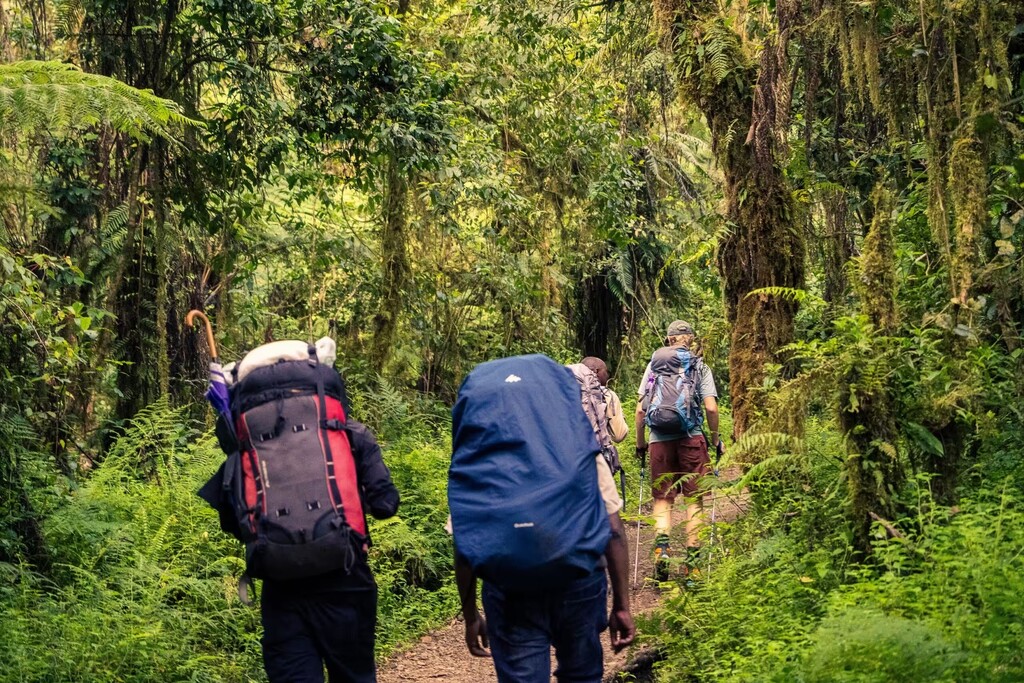
Kilimanjaro Rainforest
The lower slopes are covered by lush montane rainforest.
The forest provides habitat for birds, monkeys and other wildlife, while its cool and humid environment creates a beautiful beginning to the trek.
Trekkers may encounter species such as colobus monkeys and blue monkeys depending on the route and conditions.
Experience the Alpine Desert
Higher on the mountain, the landscape changes dramatically into an alpine desert.
Vegetation becomes sparse, temperatures drop and volcanic rocks dominate the scenery.
This stark environment provides a striking contrast to the rainforest found lower down.
Reach the Arctic Summit Zone
Near the summit, conditions become extremely cold and vegetation almost disappears.
Trekkers encounter rocks, ice and volcanic terrain as they approach Uhuru Peak.
The environment can be challenging, which is why proper clothing, hydration, pacing and acclimatization are essential.
Kilimanjaro Climbing Routes
Mount Kilimanjaro has several established climbing routes, each offering a different experience.
Machame Route
The Machame Route is one of the most popular routes because of its scenic landscapes and varied terrain.
It is commonly completed over several days, allowing trekkers time to acclimatize before attempting the summit.
Lemosho Route
The Lemosho Route approaches Kilimanjaro from the west and is known for beautiful scenery and a longer itinerary.
Its additional days can provide better opportunities for acclimatization.
Marangu Route
The Marangu Route is often called the “Coca-Cola Route.”
It is the only major Kilimanjaro route where trekkers sleep in mountain huts rather than tents.
Rongai Route
The Rongai Route approaches Kilimanjaro from the northern side.
It is quieter than some of the more popular routes and offers a different perspective of the mountain.
Northern Circuit Route
The Northern Circuit is the longest established route around Kilimanjaro.
Its extended itinerary provides excellent acclimatization opportunities while allowing trekkers to experience remote areas of the mountain.
Umbwe Route
The Umbwe Route is a steep and challenging approach.
It is generally more suitable for experienced trekkers who are comfortable with demanding terrain.
Kilimanjaro Day Hikes
You do not necessarily have to climb to the summit to experience Mount Kilimanjaro.
Day hikes can take visitors into the lower sections of the mountain, particularly around the Marangu and Machame areas.
These excursions offer a taste of Kilimanjaro’s rainforest, mountain scenery and hiking experience without committing to a full summit expedition.
Two-Day Kilimanjaro Hike
A two-day hike can provide a deeper experience of the mountain than a simple day trip.
Depending on the route and itinerary, trekkers can spend more time exploring the lower slopes and experiencing the changing landscapes.
It is a good option for travelers who want a short mountain adventure without attempting the summit.
Wildlife Around Mount Kilimanjaro
The lower slopes of Kilimanjaro support a variety of wildlife.
The rainforest and surrounding areas can provide opportunities to see:
- Colobus monkeys
- Blue monkeys
- Birds
- Small mammals
- Antelope
Wildlife sightings are not guaranteed, but the mountain’s diverse habitats make the surrounding ecosystem interesting to explore.
Visit Materuni Village
A visit to Materuni Village near Kilimanjaro can complement a mountain adventure.
Visitors can explore local coffee production, walk through the village and hike toward Materuni Waterfall.
The experience provides an opportunity to learn about Chagga culture and life around the mountain.
Explore Kikuletwa Hot Springs
The Kikuletwa Hot Springs, also known as Chemka Hot Springs, are another popular excursion near Kilimanjaro.
The warm turquoise water provides a relaxing experience after hiking or safari activities.
The springs can easily be combined with a Kilimanjaro or northern Tanzania itinerary.
Kilimanjaro for Adventure Travelers
Mount Kilimanjaro is ideal for travelers seeking an active adventure.
Popular experiences include:
- Multi-day mountain trekking
- Summit attempts
- Day hikes
- Forest walks
- Cultural excursions
- Village visits
- Photography
- Scenic mountain experiences
Kilimanjaro for Couples
Couples can combine a Kilimanjaro adventure with a relaxing safari or beach holiday.
A popular Tanzania itinerary may include:
Mount Kilimanjaro → Serengeti → Ngorongoro → Zanzibar
This combination allows travelers to experience mountain landscapes, wildlife and the Indian Ocean in one journey.
Best Time to Climb Mount Kilimanjaro
Mount Kilimanjaro can be climbed throughout the year, but the drier seasons are generally preferred.
The main recommended periods are:
- January to February
- June to October
These periods generally offer more favorable trekking conditions, although weather on the mountain can change rapidly.
How to Get to Mount Kilimanjaro
Most international travelers arrive through Kilimanjaro International Airport (JRO).
From the airport, travelers can transfer to Moshi or Arusha, which are the main starting points for Kilimanjaro climbing itineraries.
Moshi is particularly convenient for trekkers because many mountain routes begin within relatively easy reach of the town.
What to Pack for Kilimanjaro
A Kilimanjaro trek requires preparation for changing temperatures.
Important items include:
- Hiking boots
- Warm layers
- Waterproof jacket
- Thermal clothing
- Gloves
- Warm hat
- Sun hat
- Sunglasses
- Sunscreen
- Headlamp
- Hiking socks
- Water bottles
- Backpack
- Trekking poles
- Personal medication
- Sleeping bag
Your tour operator can provide a detailed packing list based on your route and season.
Altitude and Acclimatization
Altitude is one of the biggest challenges when climbing Mount Kilimanjaro.
The mountain rises rapidly from the surrounding plains to nearly 6,000 meters, so allowing enough time for acclimatization is important.
Longer routes generally provide more time for the body to adjust to increasing altitude.
Trekkers should always follow their professional mountain guide’s instructions and report symptoms of altitude illness immediately.
Responsible Trekking on Kilimanjaro
Protecting Mount Kilimanjaro is essential for future generations.
Trekkers should:
- Stay on designated trails
- Avoid littering
- Carry reusable water bottles
- Respect wildlife
- Avoid removing plants or rocks
- Follow park regulations
- Respect local communities
- Listen to professional mountain guides
Responsible trekking helps preserve the mountain’s unique environment.
Why Visit Mount Kilimanjaro?
Mount Kilimanjaro offers one of Africa’s greatest adventure experiences.
From the lush rainforest to the barren alpine desert and icy summit zone, every stage of the climb provides a new landscape.
Whether you want to reach Uhuru Peak, enjoy a day hike or simply experience the mountain from its surrounding villages, Kilimanjaro offers an unforgettable Tanzania adventure.
Book Your Mount Kilimanjaro Adventure
Experience Mount Kilimanjaro with a professionally planned trekking itinerary.
Choose from the Machame, Lemosho, Marangu, Rongai, Umbwe or Northern Circuit routes, or enjoy a shorter day hike through the mountain’s lower slopes.
Combine your Kilimanjaro adventure with a Tanzania safari and Zanzibar beach holiday for a complete East African experience.