
Lake Manyara National Park
Lake Manyara National Park is one of Tanzania’s most scenic safari destinations, famous for its tree-climbing lions, large elephant herds, flamingos, groundwater forests and dramatic Great Rift Valley landscapes. Located along Tanzania’s Northern Safari Circuit, the park offers an extraordinary variety of habitats and wildlife within a relatively compact area.
Discover Lake Manyara National Park
Lake Manyara National Park covers approximately 648.7 square kilometers and lies at the base of the Great Rift Valley escarpment. Its landscapes include an alkaline soda lake, groundwater forests, acacia woodland, floodplains, wetlands and hot springs.
This variety makes the park an excellent destination for wildlife viewing, birdwatching, photography and nature experiences.
Tree-Climbing Lions
One of the most famous attractions in Lake Manyara National Park is its unusual tree-climbing lions.
Visitors may see lions resting on branches of large trees, particularly in woodland areas. Although lions can climb trees in other parts of Africa, this behavior is particularly well known in Manyara.
Seeing a lion relaxing high above the ground is one of the most memorable experiences on a Lake Manyara safari.
See Large Elephant Herds
Lake Manyara is also known for its elephants.
Large herds can be seen moving through the woodland and floodplain, feeding on vegetation and gathering around water sources.
The park provides excellent opportunities to observe elephants in a beautiful forest and savannah environment.
Discover Lake Manyara’s Flamingos
The alkaline waters of Lake Manyara attract flamingos and many other waterbirds.
Depending on seasonal conditions, visitors may see spectacular gatherings of lesser and greater flamingos along the lake shores. Pelicans, storks, herons and other waterbirds also contribute to the park’s remarkable birdlife.
Explore the Groundwater Forest
The lush groundwater forest is one of the most distinctive features of the park.
Freshwater springs from the surrounding escarpment support tall evergreen trees, creating a cool forest environment that contrasts sharply with the open savannah.
The forest provides habitat for blue monkeys, baboons, bushbucks and numerous bird species.
Enjoy a Game Drive
A game drive is the main way to explore Lake Manyara National Park.
Visitors can search for:
- Tree-climbing lions
- Elephants
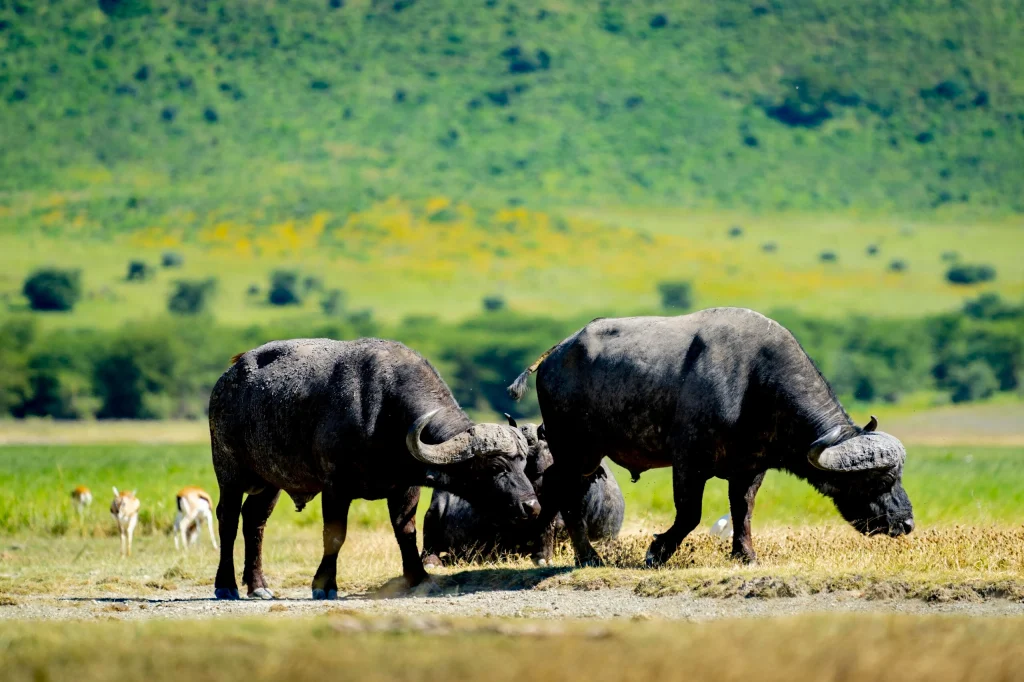
- Buffaloes
- Giraffes
- Zebras
- Wildebeest
- Hippos
- Baboons
- Blue monkeys
- Bushbucks
The combination of forest, wetlands and open areas means that different wildlife can be found throughout the park.
Visit the Hippo Pools
The wetlands and shoreline provide important habitats for hippos and waterbirds.
Hippos can often be observed resting in shallow water while storks, herons and other birds feed around the wetlands.
Visitors should always remain inside designated areas and follow their guide’s instructions around hippo pools.
Explore the Great Rift Valley Escarpment
The dramatic Great Rift Valley escarpment forms an impressive backdrop to Lake Manyara.
The steep cliffs rise above the park and lake, creating spectacular viewpoints and excellent opportunities for landscape photography.
Discover Maji Moto Hot Springs
Lake Manyara also features Maji Moto, or hot springs, where thermal water emerges through the landscape.
The mineral-rich surroundings provide an interesting geological attraction and another reason to explore beyond the traditional game-drive routes.
Enjoy the Canopy Tree Walk
The Canopy Tree Walk provides a different perspective of Lake Manyara’s forest.
Visitors can walk above the ground through the forest canopy and enjoy views of birds, monkeys, butterflies and the surrounding vegetation.
TANAPA lists the canopy walkway among the park’s visitor experiences.
Experience Bird Watching
Lake Manyara is an excellent destination for birdwatching, with more than 400 recorded bird species.
Depending on the season, visitors may encounter:
- Flamingos
- Pelicans
- Storks
- Herons
- Fish eagles
- Spoonbills
- Hornbills
- Bee-eaters
- Turacos
- Various migratory birds
The combination of forest, lake, wetlands and woodland creates exceptional bird diversity.
Enjoy a Night Game Drive
Where permitted, a night game drive provides an opportunity to experience Lake Manyara after sunset.
The sounds of the forest and wetlands change dramatically at night, while nocturnal wildlife becomes more active.
Night activities are subject to park regulations and availability.
Enjoy a Walking Safari
Walking experiences provide an opportunity to explore the environment at a slower pace.
A guided walk can reveal animal tracks, plants, insects, birds and other details that are easy to overlook from a safari vehicle.
Walking safaris are among the activities listed by TANAPA for Lake Manyara.
Lake Manyara for Photographers
The park offers excellent photography opportunities.
You can photograph elephants in the forest, lions in trees, flamingos along the lake, monkeys in the canopy and dramatic Rift Valley landscapes.
The variety of habitats means that a single safari can produce very different types of photographs.
Lake Manyara for Families
Lake Manyara is a convenient destination for families because of its location along the Northern Safari Circuit and its variety of wildlife.
Children can enjoy seeing elephants, monkeys, giraffes, flamingos and other animals while learning about Tanzania’s ecosystems from an experienced guide.
Best Time to Visit Lake Manyara National Park
Lake Manyara National Park can be visited throughout the year.
The dry season is generally favorable for wildlife viewing because vegetation is less dense and roads are easier to navigate.
The wetter months bring lush green scenery and excellent birdwatching opportunities, while flamingo numbers can vary according to lake conditions and food availability.
How to Get to Lake Manyara National Park
Lake Manyara is conveniently located on the Northern Tanzania Safari Circuit.
By road, the park is approximately 125 km from Arusha, with the journey taking around 2 to 2.5 hours under normal road conditions. The main entrance is close to Mto wa Mbu.
Many travelers combine Lake Manyara with:
Tarangire → Lake Manyara → Ngorongoro → Serengeti
The park can also be reached by scheduled or charter flights using Manyara Airstrip.
Where to Stay
Travelers can stay at camps and lodges inside or near the park, while Mto wa Mbu and Karatu offer additional accommodation options.
Staying nearby makes it easy to enjoy early morning game drives and continue toward Ngorongoro or Serengeti afterward.
What to Bring
For your Lake Manyara safari, consider bringing:
- Comfortable clothing
- Walking shoes
- Sun hat
- Sunglasses
- Sunscreen
- Insect repellent
- Binoculars
- Camera
- Extra batteries or power bank
- Reusable water bottle
- Light jacket
Binoculars are particularly useful for birdwatching and spotting animals in the forest.
Responsible Tourism
Visitors should help protect Lake Manyara’s forests, wetlands and wildlife.
Stay on designated roads and boardwalks, avoid feeding animals, do not litter and maintain a safe distance from wildlife.
Always follow your guide’s instructions, particularly around elephants, hippos and tree-climbing lions.
Why Visit Lake Manyara National Park?
Lake Manyara National Park offers an exceptional safari experience in a compact and scenic environment.
From tree-climbing lions and large elephant herds to flamingos, hippos, monkeys and hundreds of bird species, the park provides remarkable wildlife diversity.
Its groundwater forest, alkaline lake and Great Rift Valley escarpment make it a distinctive destination on Tanzania’s Northern Safari Circuit.
Book Your Lake Manyara Safari
Experience Lake Manyara National Park with a professionally planned Tanzania safari.
Discover tree-climbing lions, elephants, flamingos, lush forests and spectacular Rift Valley scenery.
Combine Lake Manyara with Tarangire National Park, Ngorongoro Conservation Area, Serengeti National Park and Zanzibar for an unforgettable Tanzania safari and beach holiday.