
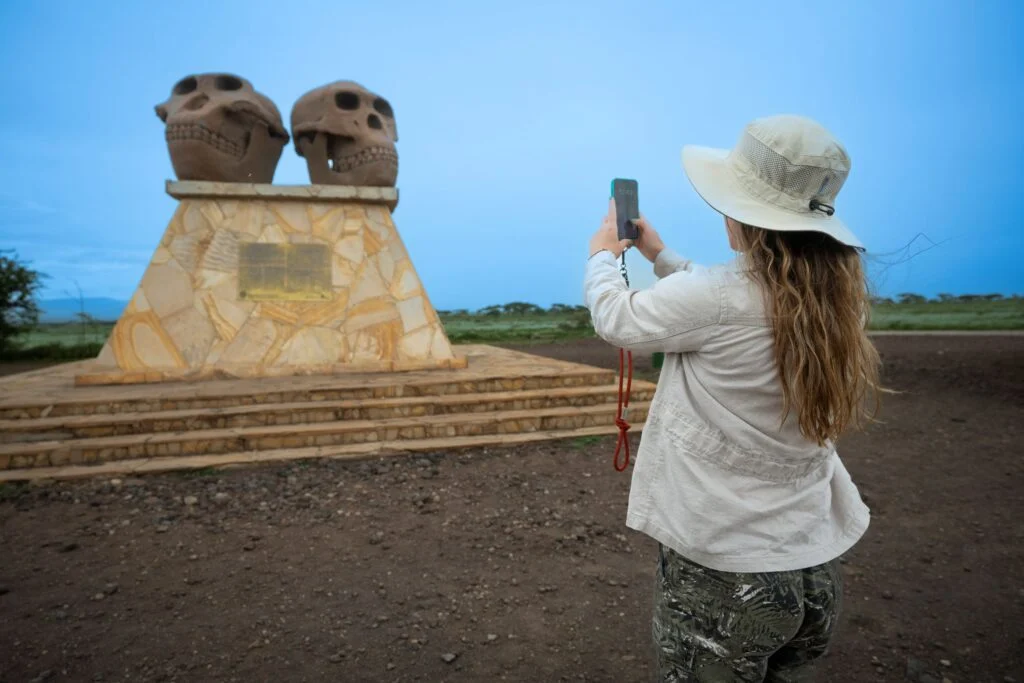
Visit Olduvai Gorge
The Visit Olduvai Gorge experience takes you deep into the history of human evolution in northern Tanzania. Located within the Ngorongoro Conservation Area, Olduvai Gorge is one of the world’s most important archaeological sites, where fossils, stone tools, and other evidence have helped scientists understand some of our earliest human ancestors.
Often described as one of the most significant paleoanthropological sites in the world, Olduvai offers a fascinating combination of archaeology, geology, history, and spectacular landscapes. A visit can include the Olduvai Gorge Museum, informative presentations, and guided visits to selected archaeological areas.
Discover Olduvai Gorge
Olduvai Gorge is a deep ravine within the Ngorongoro Conservation Area, with exposed geological layers containing an extraordinary record of human ancestry and the development of the Serengeti ecosystem.
The site was officially recognized as part of the UNESCO World Heritage Site in 1979. Archaeological research here has produced evidence extending across a vast period of human evolution.
As you stand above the gorge, the landscape itself becomes part of the story. The exposed layers reveal how geological and environmental changes created conditions that preserved fossils and archaeological materials for millions of years.
Explore the History of Human Evolution
One of the main reasons to Visit Olduvai Gorge is its importance to the study of human origins.
Research at the gorge has uncovered remains associated with several early hominin species, including Australopithecus boisei, Homo habilis, and Homo erectus. These discoveries have played an important role in developing our understanding of early human evolution.
The discoveries also provide evidence about how early humans interacted with their environment and used stone technology.
See the Olduvai Gorge Museum
The Olduvai Gorge Museum provides an excellent introduction to the archaeological importance of the area.
The museum displays fossils, stone tools, and remains of extinct animals excavated from the gorge. Visitors can also learn about the scientific work that has taken place at Olduvai and the discoveries made by researchers over many decades.
The current museum and visitor facilities were expanded and improved, with exhibits designed to make the archaeological story easier for visitors to understand.
Learn About Mary and Louis Leakey
The history of Olduvai Gorge is closely connected with the pioneering archaeological work of Mary and Louis Leakey.
Over several decades, their research at Olduvai uncovered important fossils and artefacts associated with early human ancestors. Their discoveries helped establish Olduvai as one of the world’s most important locations for research into human evolution.
Learning about their work makes a visit to the gorge even more meaningful.
See Early Stone Tools
Olduvai is famous not only for fossils but also for its stone tools.
The archaeological record includes early stone-tool traditions associated with some of the earliest known human technology. These tools provide evidence about how early humans used resources in their environment.
At the museum, visitors can see exhibits and realistic representations that help explain the importance of these discoveries.
Discover Ancient Fossils
Fossils are another major attraction at Olduvai Gorge.
Research has uncovered remains belonging to early hominins as well as numerous extinct animals that once lived in the surrounding environment. These discoveries help scientists reconstruct the ecosystems in which early humans lived.
The combination of fossils, geological layers, and archaeological artefacts makes Olduvai particularly valuable for understanding the relationship between humans and their environment.
Visit the Archaeological Sites
Depending on the arrangements for your visit, you can explore selected archaeological areas with an official guide.
The Ngorongoro Conservation Area Authority states that an official guide is required to visit the actual excavations. Some excavation sites have been preserved for public viewing, while archaeological research continues in the area.
A guided visit allows you to better understand what researchers discovered and how the different layers of the gorge relate to the history of human evolution.
Enjoy the Olduvai Gorge Viewpoint
The museum and visitor centre are positioned on the edge of the gorge, providing impressive views across the surrounding landscape.
A sheltered viewing area is used for lectures and presentations, while also offering visitors an opportunity to appreciate the dramatic geology of the gorge.
The combination of the deep ravine, surrounding plains, and distant volcanic landscapes creates excellent photography opportunities.
Understand the Geology of Olduvai Gorge
Olduvai is not only an archaeological destination. Its geology is an important part of the story.
The exposed layers preserve evidence from different periods and provide a record of environmental changes in the region. Geological processes helped create the gorge and expose the layers in which fossils and artefacts were preserved.
Understanding this geological history makes it easier to appreciate why Olduvai became such an important archaeological site.
Discover the Serengeti Ecosystem
Olduvai Gorge is located within the broader Serengeti ecosystem.
The surrounding landscapes have supported wildlife and human communities for thousands of years. The archaeological evidence from Olduvai therefore provides insight not only into human evolution but also into changes in the environment and ecosystems of the region.
This makes the experience a natural complement to a Serengeti or Ngorongoro safari.
Combine History with a Tanzania Safari
A Visit Olduvai Gorge experience is easy to combine with a northern Tanzania safari.
You can include it while travelling between:
- Ngorongoro Crater
- Serengeti National Park
- Naabi Hill
- Empakaai Crater
- Lake Natron
- Lake Manyara
- Tarangire National Park
This allows you to experience wildlife, landscapes, local cultures, and human history during the same journey.
Visit the Nearby Cultural Boma
The Olduvai visitor facilities also include a cultural boma where visitors can learn more about aspects of Maasai culture.
This adds a cultural dimension to the archaeological experience and provides another opportunity to understand the relationship between people and the landscape of the Ngorongoro Conservation Area.
Explore Nearby Attractions
Olduvai Gorge can also be combined with several nearby attractions.
Depending on your itinerary, you may visit:
- Shifting Sand
- Nasera Rock
- Olkarien Gorge
- Laetoli
- Ngorongoro Crater
- Empakaai Crater
- Serengeti National Park
The Olduvai Gorge Museum notes that guided excursions can be arranged to several archaeological and geological sites in the surrounding area.
Photography at Olduvai Gorge
Olduvai provides excellent opportunities for landscape, archaeological, and cultural photography.
You can photograph:
- Olduvai Gorge
- The museum
- Geological layers
- Surrounding plains
- Archaeological displays
- Viewpoints
- Maasai cultural areas
- Volcanic landscapes
The viewpoint above the gorge is particularly impressive for wide landscape photographs.
What to Bring
For a comfortable Visit Olduvai Gorge experience, we recommend bringing:
- Comfortable walking shoes
- Lightweight clothing
- Sun hat
- Sunglasses
- Sunscreen
- Drinking water
- Camera
- Binoculars
- Small backpack
- Light jacket
The area can be sunny and dry, so sun protection and sufficient drinking water are important.
Who Will Enjoy Olduvai Gorge?
Olduvai Gorge is particularly interesting for travelers who enjoy:
- History
- Archaeology
- Human evolution
- Anthropology
- Geology
- Photography
- Cultural experiences
- Educational travel
- Nature and landscapes
It is also a great destination for families with older children and travelers who want to understand the history behind the landscapes they see during a Tanzania safari.
Best Time to Visit Olduvai Gorge
Olduvai Gorge can be visited throughout the year. The Ngorongoro Conservation Area Authority confirms that the gorge is open to visitors year-round.
However, your guide can help you choose the best time of day depending on your wider safari itinerary and weather conditions.
Responsible Tourism at Olduvai Gorge
Olduvai is a protected archaeological and cultural heritage site, so responsible tourism is important.
Do not remove fossils, stones, artefacts, or other materials from the area. Follow your guide’s instructions and stay within designated areas.
Respect the museum, archaeological sites, local communities, and surrounding environment.
Why Visit Olduvai Gorge?
A Visit Olduvai Gorge experience gives you the opportunity to explore a place that has played an extraordinary role in our understanding of human origins.
You can see archaeological exhibits, learn about early hominins, discover ancient stone tools, hear about the work of Mary and Louis Leakey, and look across the landscape where some of the most important discoveries in human evolutionary research were made.
For anyone interested in history, archaeology, anthropology, or the origins of humanity, Olduvai is one of the most fascinating stops on a northern Tanzania safari.
Book Your Visit to Olduvai Gorge
Add a Visit Olduvai Gorge experience to your Tanzania safari and discover one of the world’s most important archaeological landscapes.
Explore the museum, learn about ancient fossils and stone tools, discover the work of the Leakeys, and enjoy spectacular views across the gorge and surrounding Serengeti landscape.
Combining Olduvai Gorge with Ngorongoro Crater and Serengeti National Park creates a memorable journey through Tanzania’s wildlife, landscapes, culture, and deep human history.