
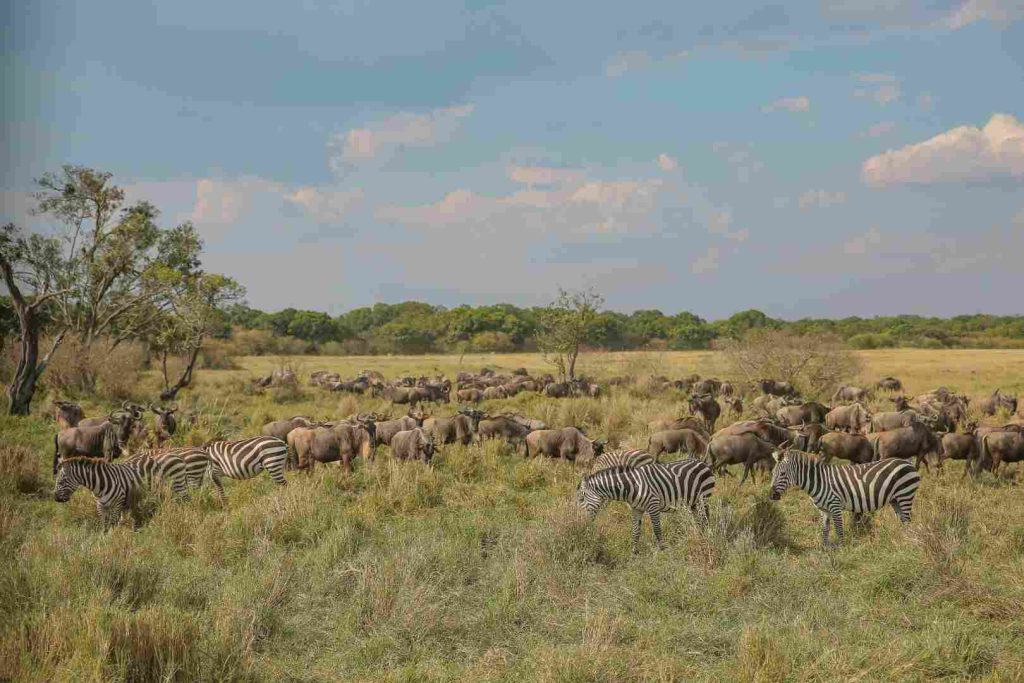
Serengeti National Park
Serengeti National Park is Tanzania’s most iconic safari destination and one of Africa’s greatest wildlife areas. Located in northern Tanzania, the park is famous for its vast open plains, abundant wildlife and the spectacular Great Migration, when more than a million wildebeest move across the Serengeti ecosystem alongside large numbers of zebras and gazelles.
The park offers exceptional wildlife viewing throughout the year, making it an ideal destination for travelers looking for the Big Five, dramatic landscapes, photography and unforgettable safari experiences.
Discover Serengeti National Park
Serengeti means “endless plains”, a name that perfectly describes its vast grasslands stretching toward the horizon.
The park was established in the early 1950s and forms part of the larger Serengeti ecosystem, which extends beyond the park into neighboring protected areas and Kenya’s Maasai Mara.
Today, Serengeti remains one of Tanzania’s most important protected areas and a cornerstone of wildlife conservation.
Witness the Great Migration
The Great Migration is the most famous attraction in Serengeti National Park.
More than one million wildebeest, together with hundreds of thousands of zebras and other grazing animals, move through the Serengeti ecosystem in search of fresh grass and water.
The migration follows rainfall and changing grazing conditions, so the location of the herds changes throughout the year.
See the Big Five
Serengeti National Park is an excellent destination for seeing Africa’s Big Five.
During game drives, visitors may encounter:
- Lions
- Leopards
- Elephants
- African buffalo
- Black rhinoceros
The park also supports cheetahs, giraffes, hippos, hyenas, crocodiles and many species of antelope.
Explore the Central Serengeti
The Central Serengeti, particularly the Seronera area, is one of the most popular safari regions in the park.
Permanent water sources and diverse habitats support wildlife throughout the year.
The area is especially well known for large numbers of lions, leopards, cheetahs and other predators.
Visit the Western Corridor
The Western Corridor offers a different landscape from the open plains of central Serengeti.
The region features woodland, grassland and the famous Grumeti River.
During the migration season, large herds move through this area, creating opportunities to witness dramatic wildlife encounters around the river.
Explore Northern Serengeti
Northern Serengeti offers a quieter safari experience and connects with Kenya’s Maasai Mara ecosystem.
The region is particularly famous for the Mara River crossings during the Great Migration.
Because river crossings are unpredictable, patience is essential. Visitors may wait for hours before the herds decide to enter the water.
Park guidelines require vehicles to remain in designated areas and avoid approaching animals during crossings.
Experience a Game Drive
A game drive is the classic way to explore Serengeti National Park.
Early morning and late afternoon drives provide excellent opportunities to observe wildlife when temperatures are cooler and many animals are active.
Your safari guide can help identify animals, explain their behavior and locate predators hidden in the grasslands.
Enjoy a Hot Air Balloon Safari
A hot air balloon safari offers a completely different perspective of Serengeti.
Flying above the plains at sunrise allows you to see the landscape from the air while wildlife moves below.
The experience is particularly memorable for photography and special occasions.
TANAPA currently lists balloon safari among the activities available in Serengeti.
Discover Serengeti Wildlife
Serengeti supports an extraordinary variety of wildlife.
Depending on the area and season, visitors may see:
- Wildebeest
- Zebras
- Giraffes
- Lions
- Leopards
- Cheetahs
- Elephants
- Buffalo
- Hippos
- Hyenas
- Crocodiles
- Gazelles
- Antelopes
- Black rhinoceros
The combination of large herbivore populations and predators creates one of Africa’s most remarkable wildlife ecosystems.
See Lions on the Open Plains
Lions are among the most commonly seen big cats in Serengeti.
Large prides can often be found resting under trees, beside rocky outcrops or in open grasslands.
The abundance of prey provides excellent hunting opportunities for these powerful predators.
Search for Leopards
Leopards are more elusive than lions and can require patience to find.
They often rest in trees or thick vegetation during the day.
Experienced guides know the areas where leopards are frequently seen and can help visitors spot these secretive cats.
Look for Cheetahs
The open grasslands of Serengeti provide ideal habitat for cheetahs.
Their speed and hunting behavior make them particularly exciting to observe.
Early morning game drives can be productive because temperatures are cooler and the animals may be more active.
Search for Black Rhinoceros
Black rhinoceroses are among the more difficult animals to encounter in Serengeti.
The species is threatened and carefully protected within Tanzania’s conservation areas.
Seeing one in the wild is a special experience and highlights the importance of Serengeti’s conservation work.
Visit the Seronera Valley
Seronera is one of Serengeti’s most famous wildlife areas.
The valley contains water sources that attract animals throughout the year, making it one of the best places for general wildlife viewing.
It is also an important area for big cats.
Explore the Kopjes
Serengeti’s kopjes are granite rock formations rising above the surrounding plains.
These rocky outcrops provide shelter and resting places for wildlife.
Lions can often be seen resting on or around kopjes, while smaller animals use the rocks for protection.
Enjoy Bird Watching
Serengeti is also an excellent destination for bird lovers.
The park’s different habitats support a wide range of resident and migratory birds.
Visitors may encounter eagles, vultures, secretary birds, ostriches, rollers, hornbills and many other species during game drives.
Experience the Calving Season
The southern Serengeti and surrounding plains become especially important during the calving season.
Large numbers of wildebeest give birth when conditions provide suitable grazing.
Newborn animals attract predators, creating dramatic wildlife interactions.
The calving season is particularly rewarding for travelers interested in predator behavior and wildlife photography.
Enjoy Wildlife Photography
Serengeti is one of the world’s great wildlife photography destinations.
The combination of open landscapes, golden grasslands, dramatic skies and abundant animals creates excellent opportunities for photography.
Early morning and late afternoon light can produce particularly beautiful images.
Serengeti for Honeymooners
Serengeti is an unforgettable destination for couples.
A romantic safari can include:
- Private game drives
- Luxury lodges
- Hot air balloon flights
- Bush breakfasts
- Sundowners
- Private dinners
- Wildlife photography
- Sunset views
Combining Serengeti with Zanzibar is also a popular way to create a Tanzania safari-and-beach honeymoon.
Serengeti for Families
Families can also enjoy a Serengeti safari with appropriate planning.
Private vehicles allow families to travel at their own pace and take breaks when needed.
Many safari lodges and camps offer family-friendly accommodation and activities, although age requirements can vary.
Serengeti for Adventure Travelers
Adventure travelers can experience Serengeti through several activities, including:
- Game drives
- Balloon safaris
- Photography
- Bird watching
- Migration safaris
- Cultural experiences in nearby areas
The park’s vast landscapes make every safari route different.
Best Time to Visit Serengeti National Park
Serengeti can be visited throughout the year, but the best time depends on your interests.
June to October is generally popular for dry-season wildlife viewing, when animals are easier to spot around available water sources.
January to March is an important period for the calving season in the southern Serengeti.
July to October can provide opportunities to witness parts of the migration in the northern Serengeti, including possible Mara River crossings.
Migration movements depend on rainfall and grazing conditions, so exact locations cannot be guaranteed.
How to Get to Serengeti National Park
Serengeti can be reached by road or domestic flight.
Many visitors begin their safari in Arusha and travel through Tarangire or Ngorongoro before entering Serengeti.
Domestic flights can also connect Serengeti with Arusha, Kilimanjaro and other safari destinations.
The best option depends on your itinerary, budget and available time.
Where to Stay in Serengeti
Serengeti offers accommodation ranging from comfortable tented camps to luxury safari lodges.
Popular areas include:
- Central Serengeti
- Western Serengeti
- Northern Serengeti
- Eastern Serengeti
Mobile camps can also follow the migration, allowing travelers to stay closer to the herds during different periods of the year.
What to Bring
For a Serengeti safari, consider bringing:
- Lightweight clothing
- Warm layers for early mornings
- Comfortable shoes
- Sun hat
- Sunglasses
- Sunscreen
- Insect repellent
- Binoculars
- Camera
- Extra batteries or power bank
- Reusable water bottle
- Small backpack
Neutral-colored clothing is practical for safari activities.
Responsible Tourism in Serengeti
Protecting Serengeti is everyone’s responsibility.
Visitors should always follow park regulations and their guide’s instructions.
Do not approach, feed or disturb wildlife.
Never leave the vehicle in restricted areas.
Keep a respectful distance from animals.
Avoid littering and take all waste with you.
During migration river crossings, follow designated viewing areas and vehicle regulations established by park management.
Serengeti National Park Conservation
Serengeti is one of Tanzania’s most important conservation areas.
Its protected ecosystem supports large populations of wildlife and preserves one of the world’s most significant natural migrations.
Tanzania’s national parks are managed for conservation while tourism provides important revenue for park management and protection.
Why Visit Serengeti National Park?
Serengeti National Park offers one of the most complete safari experiences in Africa.
The park combines endless savannahs, extraordinary wildlife, spectacular predators and the world-famous Great Migration.
Whether you want to see lions hunting, search for elusive leopards, watch wildebeest cross the plains or simply enjoy the silence of the African wilderness, Serengeti delivers unforgettable experiences.
Book Your Serengeti Safari
Experience Serengeti National Park with a carefully planned Tanzania safari.
Explore the endless plains, search for the Big Five, follow the Great Migration and enjoy unforgettable wildlife encounters with an experienced safari guide.
Serengeti can also be combined with Ngorongoro Crater, Tarangire National Park, Lake Manyara and Zanzibar to create a complete Tanzania safari and beach holiday.